
In today’s digital world, having a website is just the first step.
Finding your website amid the billions of other web pages on the internet is the true issue.
Herein lies the role of Search Engine Optimization (SEO), a potent tactic to raise the exposure of your website, draw in natural traffic, and expand your company.
We’ll explain SEO in layman’s terms in this blog and discuss why it’s so important for all businesses.
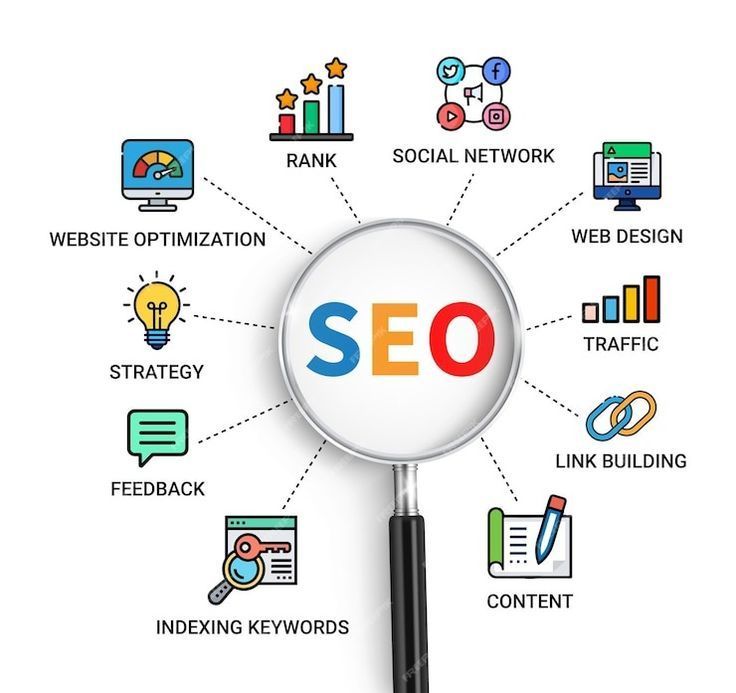
What is SEO?
The practice of improving your website to rank higher on search engines like Google, Bing, or Yahoo is known as search engine optimization, or SEO.
Increasing organic traffic—visitors who discover your website spontaneously through search queries, independent of paid advertising—is the ultimate goal of SEO.
Building a user-friendly, reliable, and authoritative website that pleases both search engines and users is the goal of SEO, which goes beyond simply ranking well on Google.
Why SEO Matters for Business Growth
Increased Visibility: Your chances of getting viewed by potential clients are much increased when you rank on Google’s first page.
Targeted Traffic: SEO attracts customers who are actively looking for your goods or services, increasing the likelihood that they will make a purchase.
Cost-Effective Marketing: Organic traffic generated by SEO is sustainable and free, in contrast to sponsored advertisements.
Credibility & Trust: People tend to view websites with higher rankings as more reliable and trustworthy.
To put it briefly, SEO is a long-term investment that supports online business expansion.
Key Components of SEO
Knowing the key elements of SEO is necessary to comprehend it. To make things more clear, let’s dissect them:
- Natural Traffic
The goal of SEO is to draw traffic organically without spending money on advertisements.
Your website will receive steady traffic over time if it ranks well in search results for pertinent inquiries.
Because organic visitors are actively looking for the solutions your company offers, they are frequently more engaged.
- Search Intent & Keywords
The words or phrases that people enter into search engines are known as keywords.
Selecting the appropriate keywords is essential since it dictates who will view your material.
Knowing the user’s goals, whether they be transactional, navigational, or informational, is known as search intent.
Example: Rather than merely learning about marketing, someone seeking for “best digital marketing services” is probably trying to hire a company.
- SEO on-page
Optimizations made within your website itself are referred to as on-page SEO. It aids search engines in comprehending the purpose of your website. Important components consist of:
Meta descriptions and title tags: Write a summary of your page for both consumers and search engines.
H1, H2, and H3 header tags: Organize your writing for both SEO and readability.
URL structure: Give each page a clear, informative URL.
Images and Alt Text: Enhance accessibility and aid search engines in comprehending visual material.
Good content should be interesting, educational, and pertinent.
Both the user experience and ranking potential are enhanced by a well-optimized on-page structure.
- SEO Off-Page
Activities outside of your website that affect rankings are referred to as off-page SEO.
Backlinks: Search engines interpret links from other reliable websites as an indication of authority and trust.
Social media mentions: Shares and interaction might tangentially increase exposure.
Citations and online reviews: Credibility is increased by local listings and favorable reviews.
In essence, off-page SEO increases the authority of your website, informing search engines that it is reliable and worthwhile.
- SEO that is technical
Technical SEO concentrates on your website’s backend to enhance its performance and crawlability:
Website speed: Faster websites rank higher and provide a better user experience.
Mobile responsiveness: The majority of consumers visit websites on their phones, hence mobile-friendly websites are favored.
Secure HTTPS connection: Security increases user trust and is a ranking criteria.
Search engines can more effectively find and index your sites with the use of XML sitemaps and robots.txt.
- Experience of the User (UX)
Real people viewing your website is just as important to SEO as search engines.
Sites that are easy to use have a lower bounce rate.
Visitors are guided toward desired actions by well-structured information and clear call to action.
Overall user satisfaction is increased by mobile-friendly design and quickly loading websites.
A strong user experience (UX) tells search engines that your website is worthwhile and interesting, which automatically raises ranks.
- Measurable Outcomes and Ongoing Development
SEO is quantifiable and data-driven. With Google Analytics and Google Search Console, for example, you may monitor:
Trends in organic traffic
The best-performing pages
Rankings of keywords
Rates of click-through (CTR)
Search traffic conversions
You may continuously optimize and progress by identifying your strengths and weaknesses with the aid of regular monitoring.
Useful Advice for Successful SEO
Perform Keyword Research: Pay attention to the terms that people use to find you.
material Optimization: Produce interesting, educational, and keyword-rich material.
Create High-Quality Backlinks: Collaborate with reputable websites in your industry.
Increase website speed via minimizing code, optimizing pictures, and using caching.
Keep an eye on SEO and make adjustments depending on performance data.
Conclusion
The foundation of internet marketing is SEO. It benefits companies:
Boost awareness
Increase natural traffic
Establish credibility
Create sales and leads
Reach sustainable growth over the long run.
Businesses can build a website that people trust and search engines adore by comprehending and putting into practice technical SEO, on-page, off-page, and keyword strategies.
Keep in mind that while SEO takes time, the benefits are both economical and long-lasting. Your company will benefit for years to come if you invest in SEO now.
✅ To put it briefly, SEO is the art and science of optimizing your website for search engines, users, and authority-building while generating natural traffic and expanding your company.